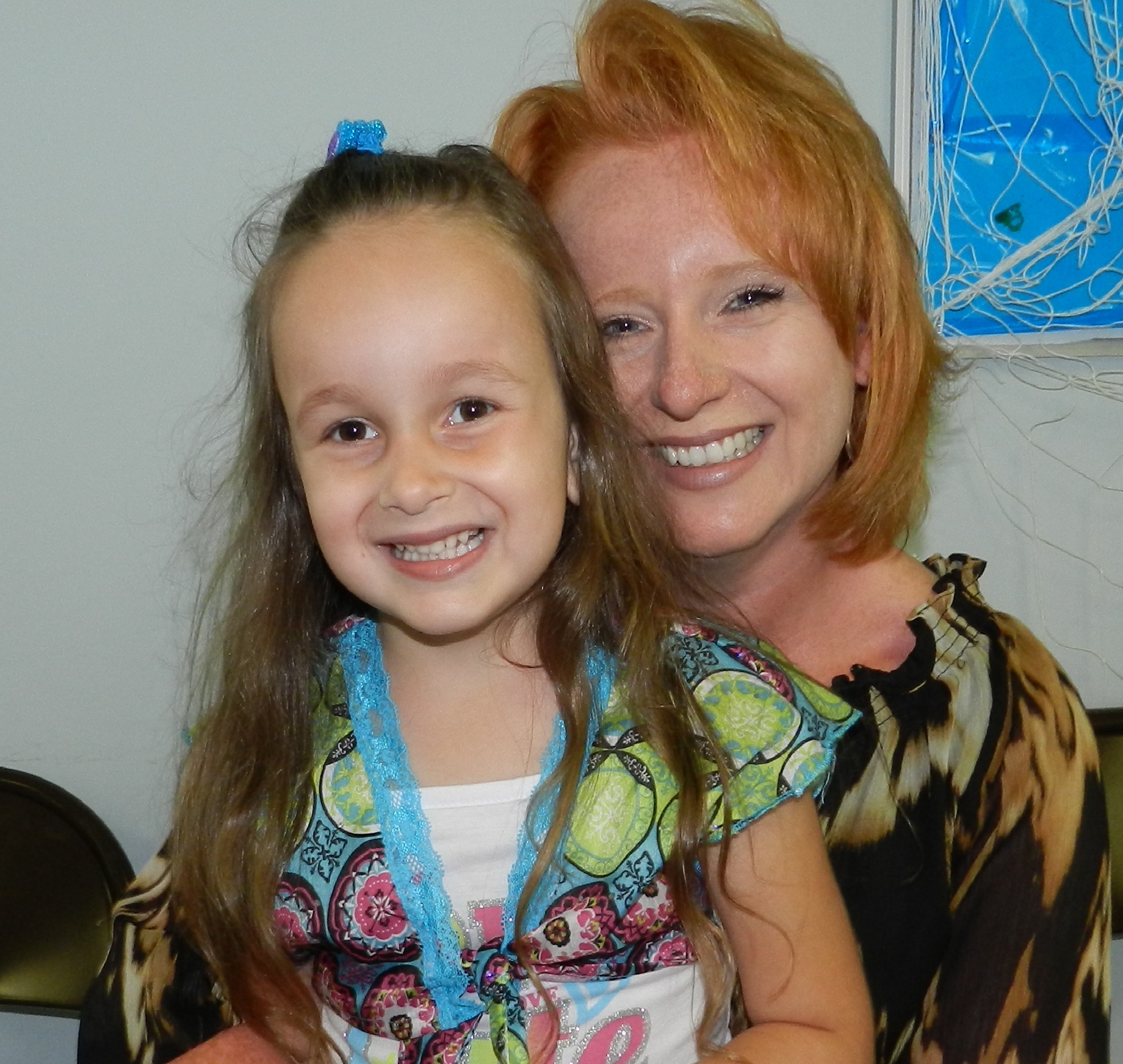
I truly wish we were sitting across a table from each other right now, sipping coffee, so that I could tell you the story of my daughter, Isabella, face to face. There are so many twists and turns to her story that it would take me a couple of hours to share all of it over coffee, but I would so enjoy watching your expressions as you learned of all that God did in her life. In fact, when I tell her story to groups of women, I just love watching women's faces as they listen to everything God did {and continues to do} in Isabella's life. It is the most amazing story. And I just love to tell it.
Quite frankly, it is a story that I sometimes cannot even believe is my own.
But it is my story.
And it is a story about which God often whispers, "Tell her story."
So, here goes...this is Isabella's story and the reason our website is called after the miracle.
The story begins in January 2008. My husband and I were living in Baltimore, MD and we had what we considered to be the perfect life. We both worked for Johns Hopkins {he was a computer programmer for the Hospital and I was a professor in the Psychology department}, we lived in a beautiful home, and we had two children who delighted our hearts daily. We attended a wonderful church and had weekly small group meetings with a group of people who were so dear to us.
Life was very good.
But what I was soon about to see, God wanted to take my life from good to great. And, as we often see when God does that, it requires a shift of focus, a re-alignment of priorities, and may include a walk through the valley where our previous "good" is shattered.
And a valley of our shattered "good life" is exactly where we found ourselves in January of 2008.
We were pregnant with our third child and we were so excited to add another person to our family. But that excitement quickly turned to horror when a doctor pulled up a stool at our 20-week ultrasound and said, "Things look very grim."
What followed those words was a list of things that were wrong with our newest & unborn family member. At this 20-week ultrasound, we learned that our baby had no bladder, no kidneys, a small stomach, multiple cardiac anomalies, problems with her brain, skin edema, and there was no amniotic fluid around the baby. To make things worse {as if they could get worse}, I was told that I had complications with the placenta that seriously endangered my health and the possibility of future children.
What seemed like a routine pregnancy to that point suddenly turned into a nightmare.
The nightmare continued as the doctor presented us with what he saw as our only option: we must abort this child. Because my health was being compromised and the baby was what they called "incompatible with life," the solution seemed simple to the doctors. And we were strongly advised to abort our baby.
I can remember leaving the hospital that day absolutely devastated. And confused. And numb. And wondering, "What in the world is happening to us?" I mean, how does anyone expect us to make a decision like this? Are they really asking us to kill our baby?
It was one of those moments where everything changes. One of those moments when you realize that you will never be the same again.
The next several days are honestly a blur. I know we had many appointments and had all sorts of testing to confirm what they were seeing. I also know that I spent many hours online trying to research what was going on and what options we truly had. I was a Hopkins researcher after all, so I did what I knew best: I researched it.
And no matter what I read or learned, the conclusion was always the same: our baby was not going to live and I was at very high risk myself.
And we had a decision to make. We could follow the doctors' advice and abort our child. Or, we could stand by our Pro-life beliefs and let God decide how this was truly going to turn out. We could let him decide who was going to live and who was going to die. Even if it meant that I did.
We chose the latter.
And with that choice, we began praying earnestly for healing. Healing for my physical issue. And even more than that, we prayed for healing for our precious little baby.
I knew that I knew that I knew that God could do it. I knew that he could heal our baby. I just didn't know if he would heal our baby. But this we did know: if we chose abortion, she would die. But if we chose to continue with the pregnancy, then maybe, just maybe, God would choose to do something spectacular and she would live. And even if there was only a .00001 percent chance that he would do that, it was better than the alternative. So, we chose to continue with the pregnancy.
And we prayed.
I would be lying if I told you that everyone agreed with our decision. And the ones who disagreed most vehemently were our doctors. About a week after we received the devastating news, we were called in to speak with a physician who was consulting on our case and who wanted to explain to us more what was going on. We had made our desire to continue with the pregnancy clear and I think this doctor thought we just did not understand what was going on. It quickly became apparent in this meeting that her goal was to convince us to abort our baby. As I was trying to find ways to save our baby, this doctor was trying to show us why we should not have hope. I remember asking for another ultrasound to confirm what was seen before and the physician responded that we had two bad ultrasounds in three weeks and nothing was going to change. At the end of the appointment, I finally just told her that we wanted to just wait and see what will happen. And then she uttered words to me that I will remember for the rest of my life. She looked at me and asked what I was waiting for. And then before I could answer, she leaned forward and said, "If you are waiting for a miracle, it's not going to happen."
Do you know what the funny thing about miracles is? Nobody thinks a miracle looks real likely to happen before it happens. Things always look real bad before a miracle. In fact, the whole reason you need a miracle is because things look bad. If things weren't bad, you wouldn't need one. So to tell me a miracle is not going to happen because things look bad presently misses the whole point of when miracles happen. Miracles always happen when something looks bad first. You see, you don't need a miracle if things aren't bad.
And at that point in our lives, we needed a miracle.
So that is how we prayed. That is how our small group prayed. That is how my family prayed. And that is how strangers who heard about our story prayed.
We prayed for a miracle.
But we prayed with full realization that while he could perform a miracle, he may not choose to. But regardless of whether he performed a miraculous healing or not, he was going to show up by carrying us through. That I was certain of.
So with that decision to continue with our pregnancy, we committed ourselves to God and his determination of how this was going to end. Maybe our baby would die. Maybe I would die. Maybe we both would live. We just didn't know. But we did know that putting the outcome in God's hands was far better than putting it in our own.
And with that decision, the longest 4 1/2 months of my life began.
All we could do was wait. And pray. And wait. And pray. And wait.
We did have more testing and within a few weeks of the original diagnosis, the Lord began to really show up. First, the condition that they said I had completely resolved. And in the words of the doctors, "That never happens." After that, some of the problems with our baby began to resolve.
And slowly, after weeks of waiting, we began to have some hope.
That hope was dashed, however, when we went in for a NICU consult about two months after the original diagnosis. We had been meeting with doctors three times a week for several weeks and while they began to see some improvement, they continued to counsel us to expect any number of horrible outcomes. And as the pregnancy continued, their primary concern was that our baby would not be able to breathe when she was born. Because of the problems she had at 20 weeks, they suspected that her lungs were not developed and that they would be able to do nothing to help her at birth. In fact, they told me to expect that she would gasp for breath and that she would die in my arms.
There really are no words to describe what it feels like to just have to wait and see what your life is going to hold. For 4 1/2 months, all we could do was wait to see what God had for us at the end of the journey. I had no doubt that the Lord was going to sustain us and see us through whatever it was that we were going to face at the end our pregnancy, but I just didn't know how bad it was going to be. I didn't know how hard it was going to be to walk. I just didn't know what we were going to be walking through.
I knew who was going to walk with us. But I didn't know what he was going to ask us to walk through.
And honestly, by the end of the pregnancy, I just wanted to get there. I just wanted to see what the journey was that God was going to ask us to walk.
I prayed for a miracle. I prayed for our baby to live. But much like Jesus in the garden, I also prayed for his will to be done and for him to just strengthen us through it.
On June 3rd, we finally got to see what God's will was. After nearly 5 months of walking a road of uncertain outcomes, the moment had come where we were going to see how God wanted this to end.
On the morning of June 3rd, my husband and I went in for a routine prenatal appointment and the doctors saw that our little baby was struggling. After much discussion, they decided to deliver her that day and with that decision, the time had come to see what God had done.
I can remember lying on the operating room table in one of the most prestigious hospitals in the world and pleading with the Lord that this was it. If he was going to heal her, this was his last chance. He had to reveal himself now. And as I began to go numb, I remember begging him to truly be with us & sustain us as the night went on and our uncertain future was becoming our present reality.
In the early evening, Isabella Grace Piferi was born. And, much to the surprise of the Johns Hopkins medical team, she needed no interventions or special equipment at birth. She didn't struggle to breathe, but instead, she cried with a sound so loud and so sweet.
And as she cried, the angels sang.
She spent one week in the hospital and then we took her home.
God had performed a miracle.
And it honestly is too amazing to even comprehend.
When I am asked about this experience, oftentimes people say to me that ultrasounds can be wrong and maybe there was no miracle. But there is no doubt in my mind that God performed a miracle. We had numerous tests early on in the pregnancy that showed that things were very hopeless. And throughout the pregnancy, doctors were constantly telling us to expect a bad outcome. But, I think my favorite moment is one that I actually didn't experience, but was told about later.
It happened in the operating room after Isabella was born. A couple of doctors were standing around after her birth and one of them was just staring at the floor, shaking his head. And then he said, "I don't get it. I really don't get it. I saw the ultrasounds. I reviewed her tests. I don't know what happened here."
Well, I do.
God happened here.
God took a hopeless situation and turned it into a miracle.
I shudder to think that we could have so easily chosen to abort our baby and essentially would have killed the opportunity for God to work mightily in her life and in our lives. We would have missed the miracle. And, we would have missed experiencing God through it all. Through the miracle. Through the waiting. We would have missed the most amazing experience of God and the various facets of his character if we had chosen to handle this problem on our own.
We would have missed his power to heal.
We would have missed his power to comfort.
We would have missed his power to sustain us through uncertainty.
We would have missed his power to love us & strengthen us through others.
We would have missed out on the power of having others praying for you.
And we would have missed out on what he had planned for us after the miracle.
You see, this experience completely changed my life. It shook me to my very core and it created in me a dependence and faith and realization of God that I simply did not have in my "good" life. And from this darkest valley, God revealed himself and changed me. He performed an amazing miracle in the life of my daughter and by saving her life, he saved mine too. And with it, has taken me on the journey of a lifetime after the miracle.
A Johns Hopkins physician once told me that if I was waiting for a miracle, it wasn't going to happen.
Well, it happened.
And I am not the same because of it!